
When my kids were toddlers, I was always happiest when the artwork they brought home was ugly.
You read that right.
Though it may not get prime real estate on your refrigerator, ugly artwork is honest. Coloring out of the lines and picking a puke shade of green for an elephant; too much glue and not enough symmetry- these were all signs that my tiny humans participated during art, learning and building their skills one snapped-in-half crayon at a time.
Once in a while, my kids would come home with a perfectly curated piece that would be pleasing enough to be front and center on the fridge. It didn’t take a mother’s intuition to know that my wiggly boys served merely as supervisors while their teacher did her best work.
The thing is, learning is not about the end product; it’s about the journey and the experience. With ugly artwork, there’s evidence that children practiced their fine motor skills, color identification, staying focused on a task, and so on. My boys brought home their fair share of ugly art, and because of that, they are now able to draw elaborate cartoon characters and hilarious comic strips. They were not robbed of the opportunity to learn and grow.
Does today’s society rob people with disabilities of learning opportunities? Having witnessed this many times, I would say emphatically yes. Sometimes it’s done because human beings like to feel needed, and if they keep the individual dependent, they can be certain someone always needs them. Sometimes it’s done out of fear for their safety. We think of all the ways something could go wrong, and we try to protect them from that. I once had a Direct Support Paraprofessional (DSP) tell me that they wished they could just wrap the individual up in bubble wrap and hide them from the dangerous world. In behaving this way, we are indirectly telling those individuals that we don’t have confidence in their ability. And you know what happens if we don’t believe in them and have higher expectations of them? They will follow suit and not believe in themselves either.
Countless times I have seen “Cooking Lessons” for individuals with disabilities where the staff is doing the cooking and the individuals with disabilities are seated and watching. What are they learning there? They aren’t learning how to follow and measure ingredients. They aren’t learning how much salt is too much. They are sitting and watching, which isn’t much different than sitting at home watching the Food Network on TV.
I’ve been to many places that advertise that they employ people with disabilities, only to be disheartened when a neurotypical person takes my order or fixes my drink as the individual with a disability simply shadows behind them. Are these companies simply paying them to be a mascot? To make themselves look good or get a tax write-off? They may have a disability, but I promise they are capable of way more than most people give them credit for.
“But we can’t let them do the cooking lesson today, because we are using knives.” I’ve heard that excuse many times, and it’s understandable. Let’s think about it this way-let’s say you’ve never used a knife because your mom was always afraid you would hurt yourself. Whenever your friends invite you out to eat or over for steaks, you have to decline because it’s too embarrassing to have to ask your friends to cut your steak for you. Sounds stupid, doesn’t it? How is it any different for an individual with a disability? Now, I’m not trying to lump every single person with a disability into one category. There truly are some individuals who should not be handling knives, whether it be a history of harmful behaviors or a mobility issue, etc. However, many adults with a disability could indeed use a knife safely if given the opportunity to learn how. And maybe the first few times they try to cut up veggies, they struggle. Maybe they even get cut. However, it’s important to create a safe place for them to learn and a safe place for them to fail because part of learning is sometimes failing at first.
What I have been describing is called the “Dignity of Risk”. The Dignity of Risk is the belief that for human dignity, individuals should be able to make choices and take risks in order to have personal growth and self-esteem. All humans have the right to Dignity of Risk.
I’ve been using cooking as an example, but this sentiment can be applied to many other things. At SimplyHome, we help people with disabilities to live as independently as possible. In some cases, these individuals have their own home, sometimes even with no roommate, family, or staff coming in and out unless specifically invited. It all depends on the person what level of independence they are ready for or want. Some individuals are able to do this with no accommodations whatsoever, while others may need the support of our sensor-based technology. There are many ways to think of independence. It could be simply sleeping at your home alone each night and having staff there in the morning to support you. Or having staff available at all times due to physical limitations but being able to have privacy while in the bathroom.
I wonder if having someone believe in you is the secret sauce to success. I remember one individual I worked with who wanted to live independently. His family member told me that there was no way he’d be successful because even when she prompts him, he won’t do easy chores at home like making his bed. I remembered that statement months later, when I rode by his new house and he was cutting his grass, unprompted.
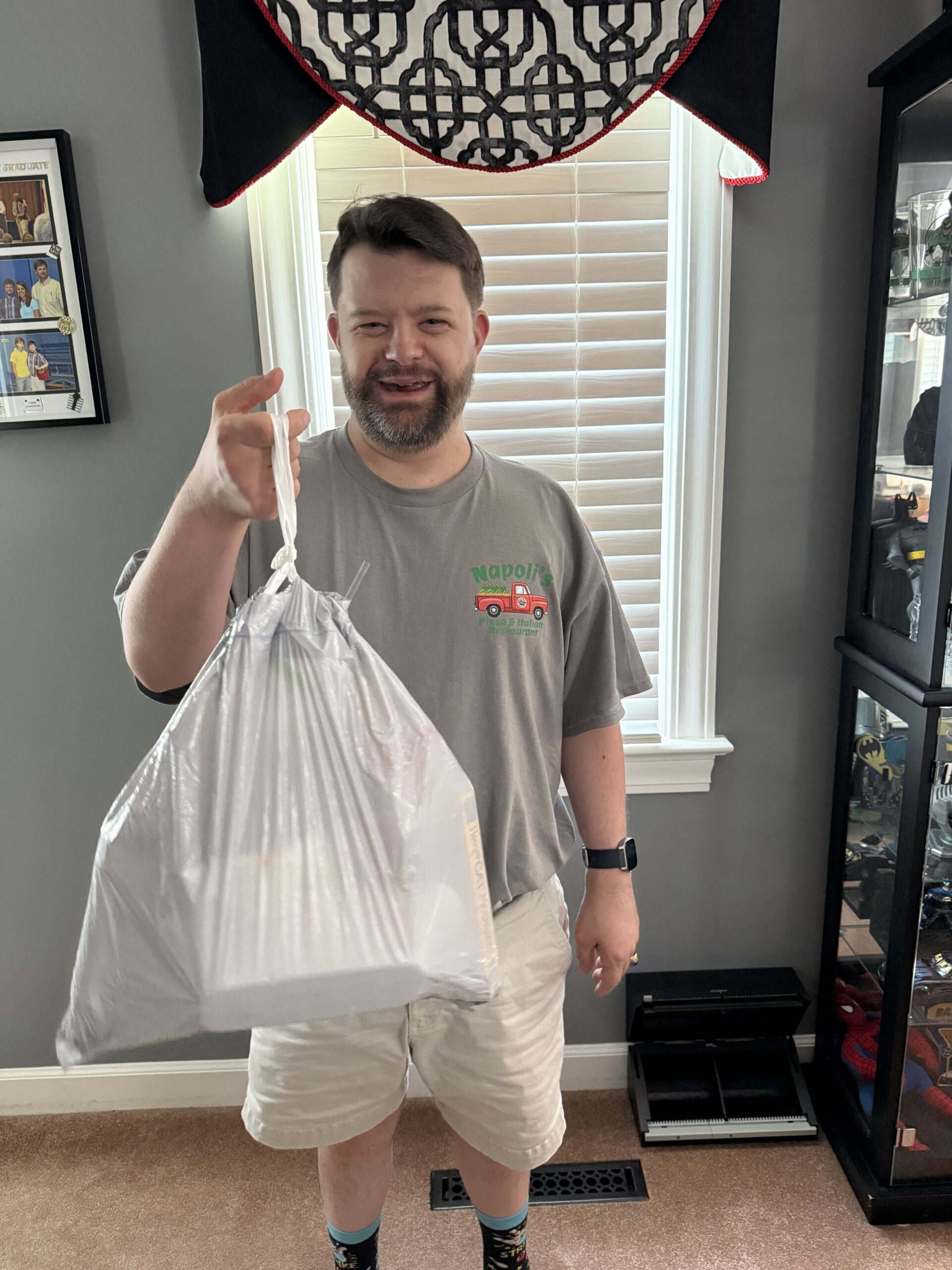
As the sister of two brothers with Down syndrome, I’m not going to lie to you and say it’s not scary. It can be terrifying to let go a little. My older brother has no interest in living independently; he likes his routine and living with my parents. In fact, I love to tease him and tell him he’s going to move in with me soon, to which he firmly responds, “No.” That’s okay; his situation is working for him, and it’s his choice. But tell him he’s responsible for emptying all the trash cans at home and watch his face light up! After a few learning opportunities, he knows that he is now trusted at home to take care of the trash. It’s a responsibility that he is proud to have! My little brother has occasionally expressed interest in more independence. If he is determined to follow through on that one day, I know he can do it. The journey won’t be without its own hiccups, but isn’t that the case for everyone? I doubt many people can say that moving out of their parents’ house for the first time didn’t come with several learning curves. That being said, I bet most wouldn’t go back in time and change a thing. I know I won’t be moving back in with my parents; will you?